
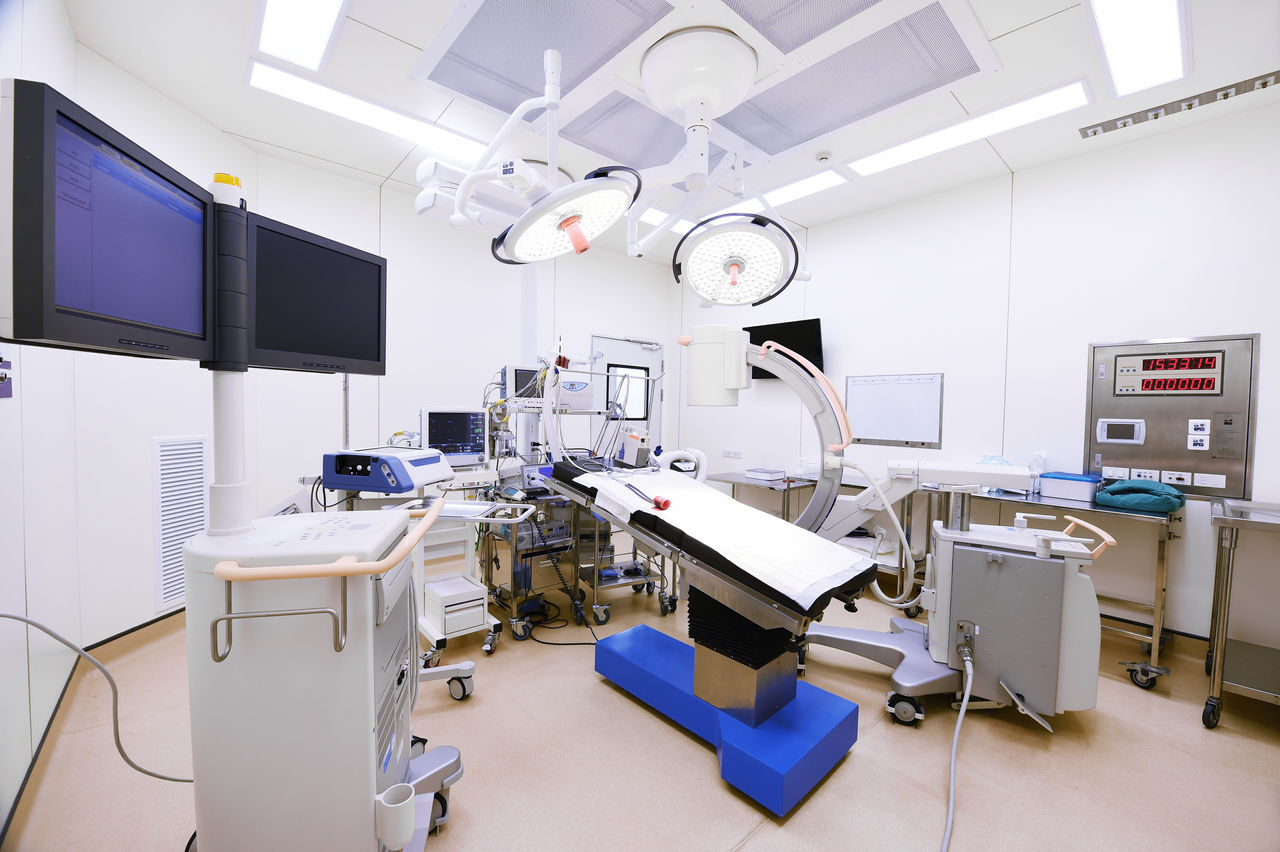
Why MIL-STD-461G Matters in Surgical Suite Lighting
When you step into an operating room, the last thing you’re probably thinking about is the lighting overhead. But for the surgeons, nurses, and most importantly the patient, those lights play a far bigger role than just making sure the room is bright.
In fact, surgical lighting has to pass some of the most demanding standards in the world to keep patients safe. One of the most important is MIL-STD-461G.
The Problem: Sensitive Patients, Sensitive Equipment
During surgery, patients are connected to highly sensitive monitoring equipment. These devices measure incredibly small electrical signals sometimes just microvolts from the body to track things like heart rhythm (ECG), brain activity (EEG), and respiration.
The challenge? Those signals are so tiny that even the slightest electrical interference can distort the readings. And guess what’s running just a few feet above the patient’s head? High-powered surgical lighting.
EMI and RFI: The Invisible Threat
Electrical devices don’t just use power they also create “noise.” That noise can spread in two ways:
- Conducted emissions: electrical noise that travels back through the power lines into other equipment.
- Radiated emissions: noise that travels through the air, like a mini radio transmitter.
In an operating room, both can cause serious problems. The patient’s body, leads, and pads can even act like an antenna, picking up this noise. The result? Confusion for the monitoring equipment and less reliable information for the surgical team.
Why FCC Certification Isn’t Enough
You might wonder: don’t devices already get certified for interference by the FCC? Yes, but FCC regulations are designed mainly for homes and businesses. In your living room, the “solution” to interference might just be moving your TV away from the microwave.
That’s not an option in the OR. Surgeons can’t exactly move the lights mid-surgery. That’s why hospitals turn to MIL-STD-461G, a U.S. military standard originally developed to ensure sensitive equipment on ships and aircraft could work without interference.
What MIL-STD-461G Testing Looks Like
Testing for MIL-STD-461G isn’t done in a typical lab. Engineers use faraday cages and anechoic chambers (spaces designed to block or absorb electromagnetic waves) to carefully measure emissions across a wide frequency range.
Two main tests matter most for surgical lighting:
- Conducted Emissions (CE102): Measures electrical noise traveling through power leads from 10kHz to 30MHz.
- Radiated Emissions (RE102): Measures transmitted noise across 10kHz to 18GHz at one meter from the fixture.
To pass, the lighting must stay below strict thresholds ensuring that sensitive patient-monitoring equipment isn’t affected.
Designing Lighting That Passes the Test
Almost no fixture passes these tests “out of the box.” Engineers use medical-grade filters, high-quality drivers, and carefully designed circuits to suppress emissions. This way, the lights do their job illuminating the surgical field without becoming a hidden risk.
Why This Matters
At the end of the day, it’s simple: the more accurate the patient monitoring, the safer the surgery. Standards like MIL-STD-461G help ensure that what seems like a small detail, the surgical lights overhead doesn’t compromise patient safety in a big way.
So next time you hear about MIL-STD-461G in a product spec sheet, you’ll know it’s not just technical jargon. It’s one more layer of protection for patients when they’re most vulnerable.