
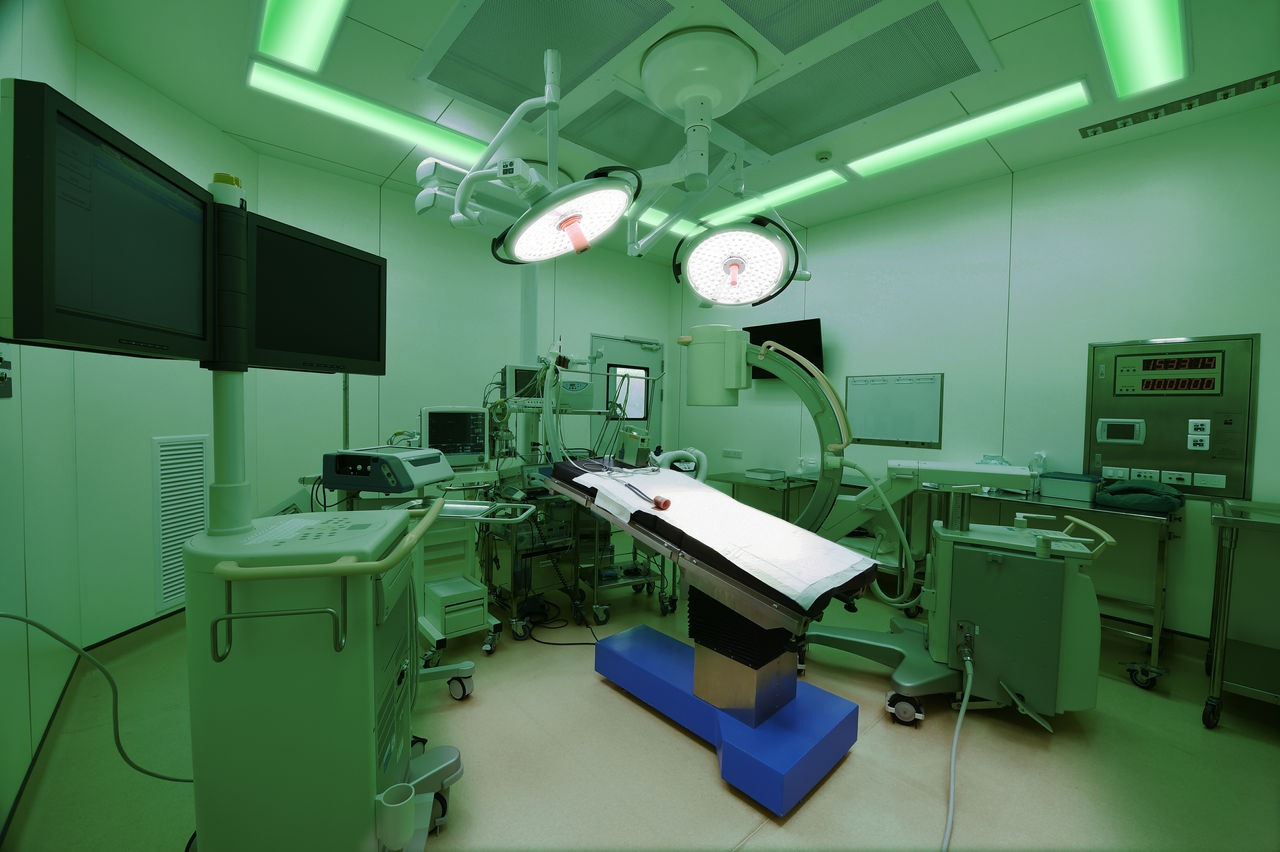
In the evolving world of surgical technology, lighting plays a critical role in ensuring precision, safety, and efficiency. Traditional surgical suite lighting often posed challenges especially during minimally invasive procedures due to glare, poor contrast, and visual fatigue. Enter green surgical luminaires, a game-changing innovation that enhances visibility and comfort for the entire surgical team.
Why Traditional Surgical Lighting Falls Short
Standard surgical lighting systems were designed to deliver intense illumination up to 10,000 foot-candles creating a stark contrast with supplemental lighting levels around 200 foot-candles. While this setup worked for open surgeries, it proved problematic for procedures involving microscopes and cameras, where images are displayed on monitors. The result? Veiling reflections, reduced contrast, and eye strain for surgeons.
Fluorescent lighting, once the norm, offered limited dimming options and made it difficult to balance lighting needs across the surgical team from surgeons to anesthesiologists and support staff. Poor lighting conditions led to decreased efficiency and increased risk of errors.
The Green Light Breakthrough
Recognizing the need for a better solution, GE introduced the F40T12/G89 green lamp, featuring a LEE Filters™ green sleeve that matched the human eye’s sensitivity curve. This innovation allowed for lower light energy while maintaining visibility, especially for reading instruments and viewing monitors. However, the use of dark green filters compromised fixture performance during general surgeries.
LED Technology: A New Era in Surgical Lighting
The transition to LED-based green surgical luminaires marked a significant leap forward. Native green LEDs produce light directly through their chemical composition, offering:
- Higher purity of green light
- Improved color rendering (CRI) for white light
- Full-range dimming capabilities
- Longer lifespan and energy efficiency
These benefits translate into better visibility, reduced glare, and enhanced comfort for the entire surgical team. Tasks like reading labels, selecting instruments, and navigating the room become easier without compromising monitor clarity.
Choosing the Right Green LED: Native vs. Phosphor Conversion
When selecting green surgical lighting, understanding the spectral performance is key. LEDs emitting in the 520–550 nm range align closely with the human eye’s sensitivity, maximizing visual acuity. However, even a 5 nm variation between fixtures can be noticeable, potentially causing discomfort or complaints.
There are two types of green LEDs:
- Native Green LEDs: Offer pure green light with narrow spectral bandwidth.
- Phosphor Conversion (PC) Green LEDs: Use blue LEDs and phosphors to emit green light but introduce unwanted amber and red wavelengths.
For optimal performance and consistency, it's crucial to source fixtures from the same manufacturer and batch, ensuring uniform spectral output across the surgical suite.
Why Certolux Green Surgical Luminaires Stand Out
Certolux delivers certified green surgical luminaires designed to meet the demanding needs of modern surgical environments. With advanced LED technology and precision engineering, Certolux fixtures provide:
- Superior visual comfort
- Reduced glare and eye fatigue
- Enhanced monitor visibility
- Reliable performance for both general and specialized surgeries